
Allegan County Multi-Day Arrest Logs
Allegan County publishes no 72-hour, weekly, or multi-day booking blotter. No official roll-off rule or photo policy exists. The county's inmate lookup covers only current custody. It cannot reconstruct last week's bookings. For multi-day coverage, turn to WHTC's area police logs. The site posts Holland Department of Public Safety entries in shifting date spans. Some cover one day; others stretch across several. These are incident logs, not a jail roster. Treat them as context for Allegan County recent arrests rather than proof of custody.
Window warning: Allegan County has no official weekly arrest feed. Treat local logs as context, then confirm custody through the county's own sources.
Holland runs its own municipal lock-up. The city also straddles Allegan and Ottawa counties. So a Holland log item may never appear on the Allegan County roster.
Read the Allegan Police Blotter Carefully
Start with the agency and dates printed on the source. Never assume a police log page covers all of Allegan County.
- Identify whether the source is an official police report archive, a news log, or an individual news story.
- Read the stated date range and originating agency. Do not convert a multi-day range into an arrest date.
- Separate calls and incidents from arrests, and arrests from bookings.
- Search the official Allegan inmate lookup when current county custody is the question.
- Use MiCOURT or the clerk for the later case and disposition, or request the source record from the responsible agency.
For the freshest activity, the Daily Arrest Report covers the roster's same-day limits. It is not a chronological booking feed.
Fields Across Local Arrest Reports
Fields vary by publisher. WHTC summarizes Holland incidents, while Plainwell's dated reports can include incident detail. The roster's booking fields cover current inmates only.
| Possible field | Meaning and limit |
|---|---|
| Date window | The period grouped by a publisher; it may span one or several days and is not a custody guarantee. |
| Incident date and time | When reported activity occurred, not necessarily when jail booking finished. |
| Street or location | Incident location in some city reports, not the holding facility. |
| Incident type or summary | An agency label or news synopsis that may omit booking and court detail. |
| Name and charge | May appear in selected arrest stories; charges are not findings of guilt. |
| Booking identifiers and bond | County roster fields when a person is currently displayed, not standard news-log fields. |
| Photo | Story-specific or agency-supplied in some news reports. No recurring county weekly mugshot gallery was found. |
A booking number is not a court docket number. A booking date is not the incident time either. Charges listed at intake can change later, so read the originating record first.
Weekend and Holiday Log Gaps
WHTC posts logs when material is available, with no fixed schedule. The county promises no weekend posting schedule. A Monday entry may lump several dates together. News outlets also wait on source material. The jail runs around the clock. Continuous staffing does not mean continuous publication. Intake review or a city lock-up can delay entries, so a quiet weekend proves nothing about how many arrests happened.
Weekend check: Note the printed dates on the source. Allow for grouped or delayed posts, and confirm present custody on the official roster.
A news account is only a starting point. Pull the actual incident report. Then check the court record for what happened after the arrest.
Allegan Arrest Archives and Retention
Allegan County keeps no online arrest blotter, so an old arrest cannot simply be pulled from a county webpage. News items from outlets like WHTC can linger in their archives. They can vanish too. A story staying up for years says nothing about what the government still holds.
Michigan General Schedule #11 supplies the real answer. Jail booking logs and control-center records stay on file for the calendar year plus seven more. Inmate jackets last even longer. Those files can hold booking cards, mugshots, arrest cards, bonds, warrants, and release forms, and they are kept until ten years after release. Short-term reports, like daily count summaries, cycle out sooner. None of this guarantees online access, and a local schedule or legal hold can override the general rules.
Want a specific older record? File through the Allegan County FOIA channel. Include the name, a date range, the arresting agency, and any booking number you have. Say exactly what you want, whether booking dates, release details, or a photograph. There is no fixed booking-photo fee, so request an estimate up front.
Local Sources Beyond the County Roster
Not every Allegan County source carries the same weight. Start with official records. News outlets add color and context around an arrest, but they do not confirm who sits in the county jail today.
The Plainwell Police Reports archive posts dated PDFs on a recurring schedule, weekly entries among them. Each report can list the street, the date, the time, and the type of incident. Plainwell sits outside the three-city page map. Its reports are incident records, not county booking records.
Allegan County News is a weekly paper. It publishes on Thursdays, and its coverage is selective, with no standing mugshot or booking section. WHTC leans toward Holland. That station matters most for Holland and the northern county area. Individual stories may credit an image to the sheriff or lean on early police-radio details, so read the attribution article by article. The Allegan County News website is a news outlet rather than an official arrest archive.
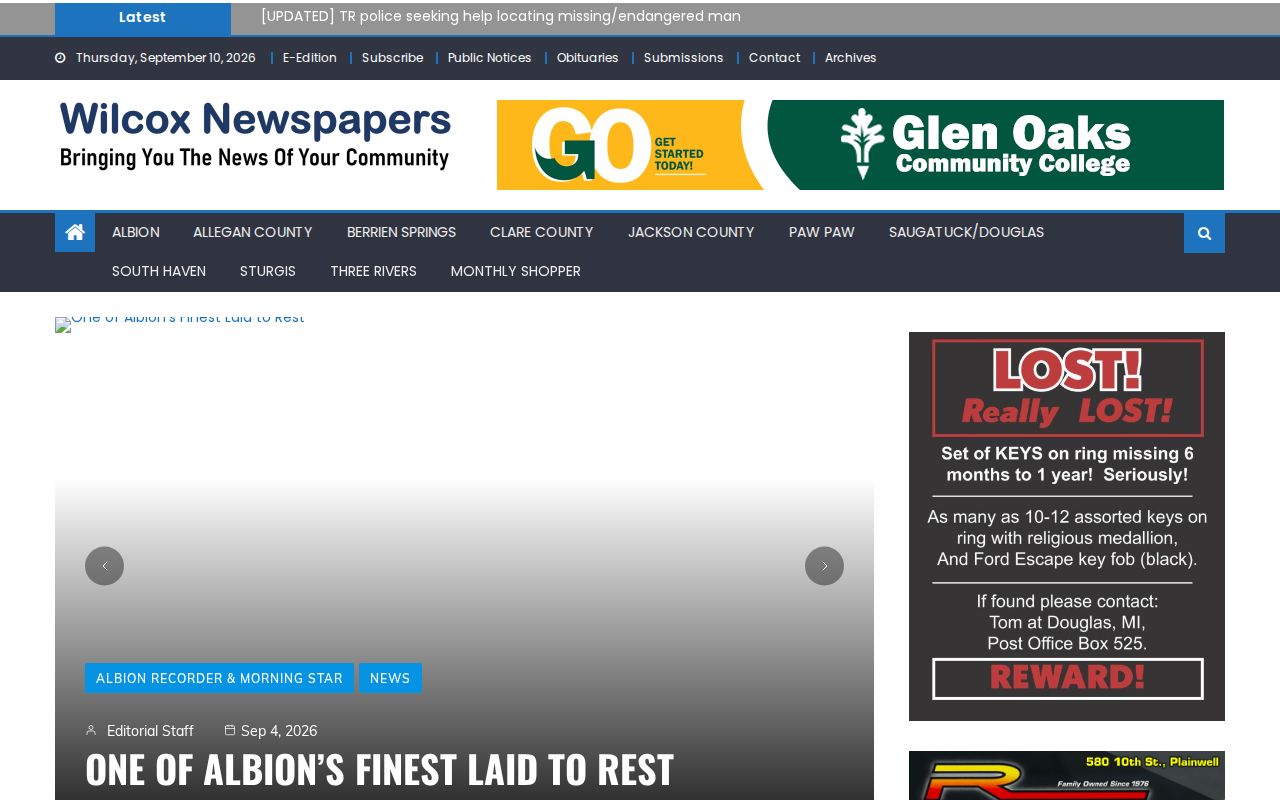
Seeing the publication helps you place a story. Still, confirm any reported arrest with the responsible agency and the court.
Holland's Changing Log Windows
WHTC labels its logs clearly. Each post is marked as a Holland Department of Public Safety log. It carries a shifting date span. That lets you look back across several days. The window covers calls and incidents rather than a complete booking list, so it is not a full arrest record on its own. The WHTC area police-log source displays the posts and their spans.
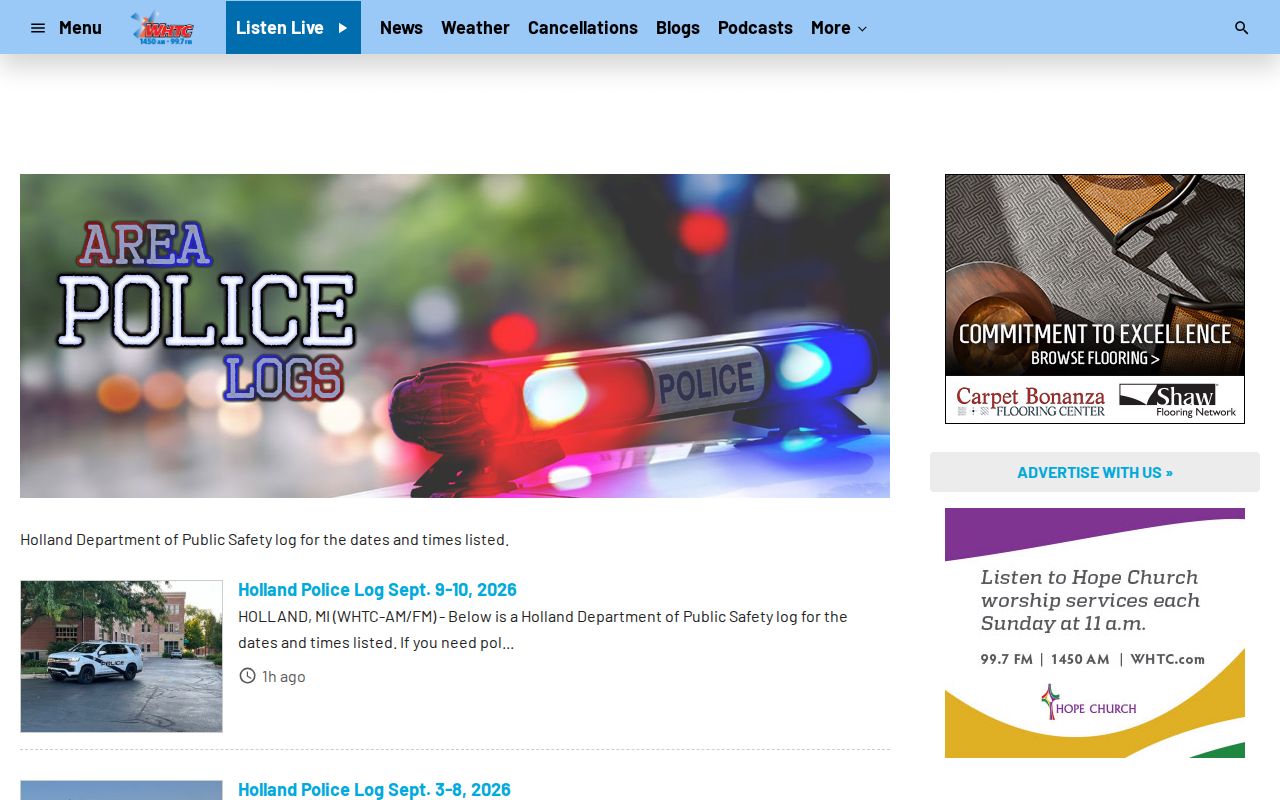
Treat it as context for Holland activity. It is not an Allegan County jail roster, and it does not prove anyone remains confined.
Why Blotters Do Not Measure Crime Trends
A week of headlines measures editorial choices, not crime. It shows what editors picked, what sources were handy, and which agency covers which turf. Counting names on the roster fails too. That list holds only people in custody right now, so it skips anyone released, held elsewhere, or booked at another facility.
For real crime trends, use Michigan's official MICR annual county tables. Arrest counts are not offense counts. They are not conviction counts either. For a historical booking list, the sheriff's records process is the direct route. For a case result, use the courts. Each tool answers its own question.
A news story still has value when it names its source, date, and place. Treat it as a lead toward the record itself. If a story says it worked from police radio, its own details are preliminary. A photograph credited to the sheriff does not turn the page into a booking archive. Do not copy or rehost that image.
A weekly workflow stacks the layers. Read the date-labeled city log first. Then verify present custody through Allegan County, ask the originating department for its incident report, and follow any filed case in court. That layered approach respects the gaps in each source. It also accounts for people released, transferred, held outside the county, or named in an incident that never became a county booking.
Someone sentenced to state custody belongs in a different lookup entirely. Check that person through the Michigan Department of Corrections OTIS system rather than a county roster or a weekly blotter.
A Wilcox Newspapers arrest story shows why source notes matter. The article says it relied on police-radio traffic before official reports came out. Details like that can change once reports are filed.
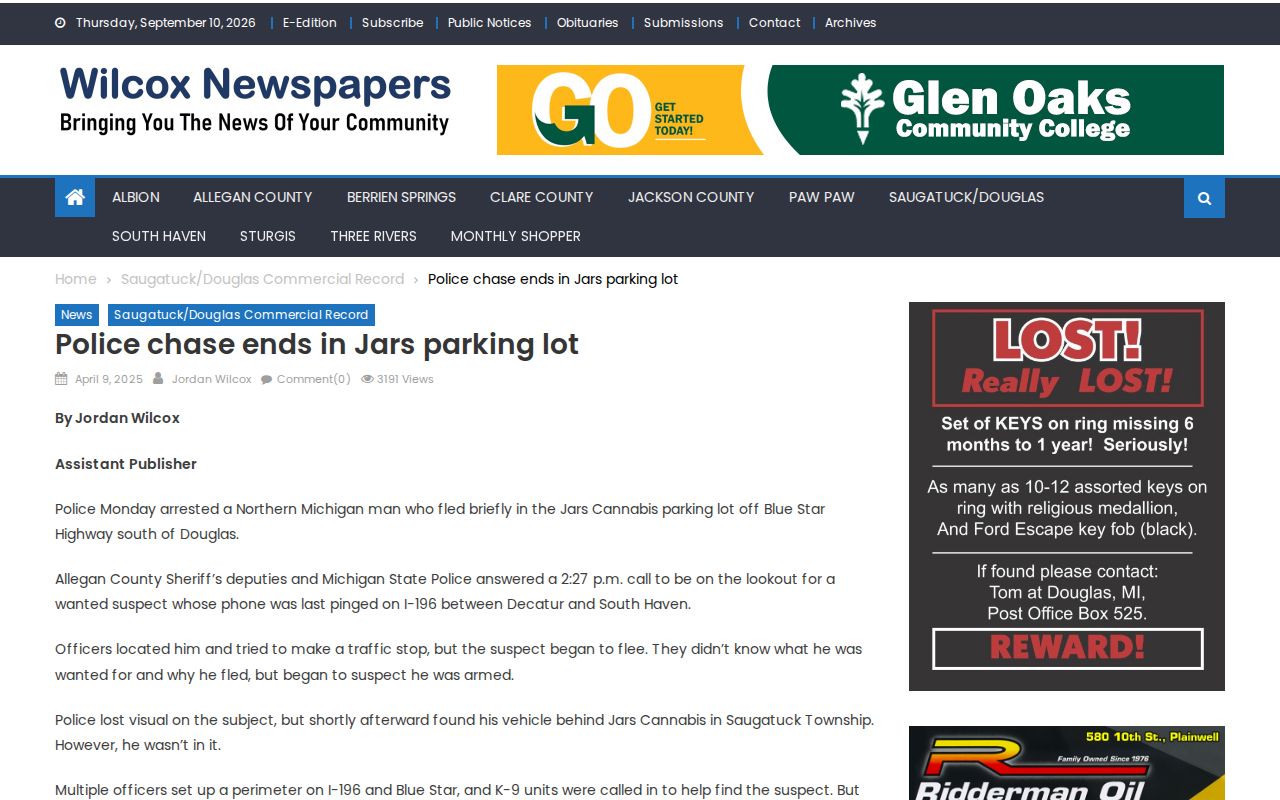
The Wilcox story is a dated narrative, not a booking log. Its preliminary sourcing belongs in any later reference to it.
Public Record Search
Sponsored Results